



Booch
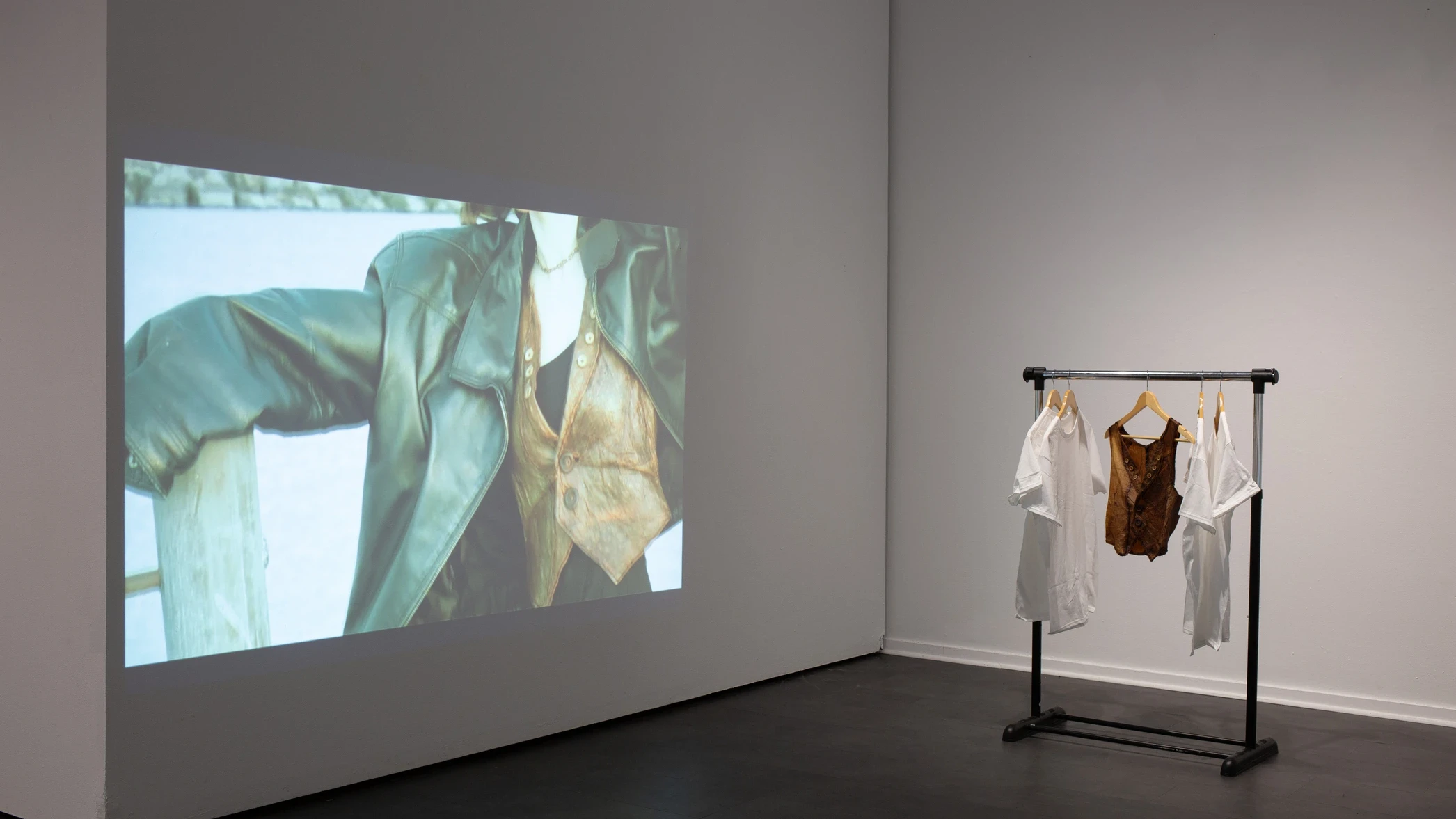
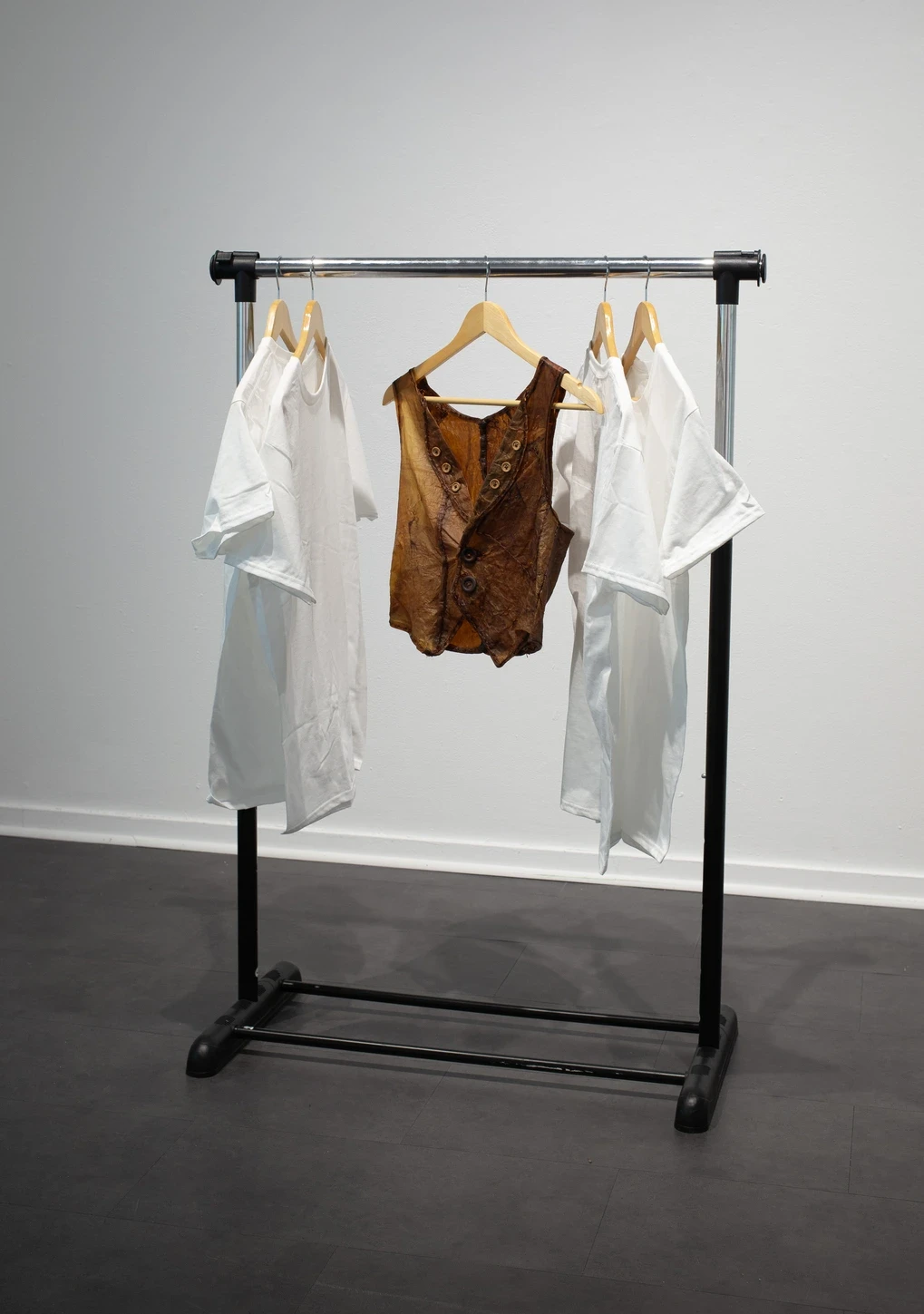
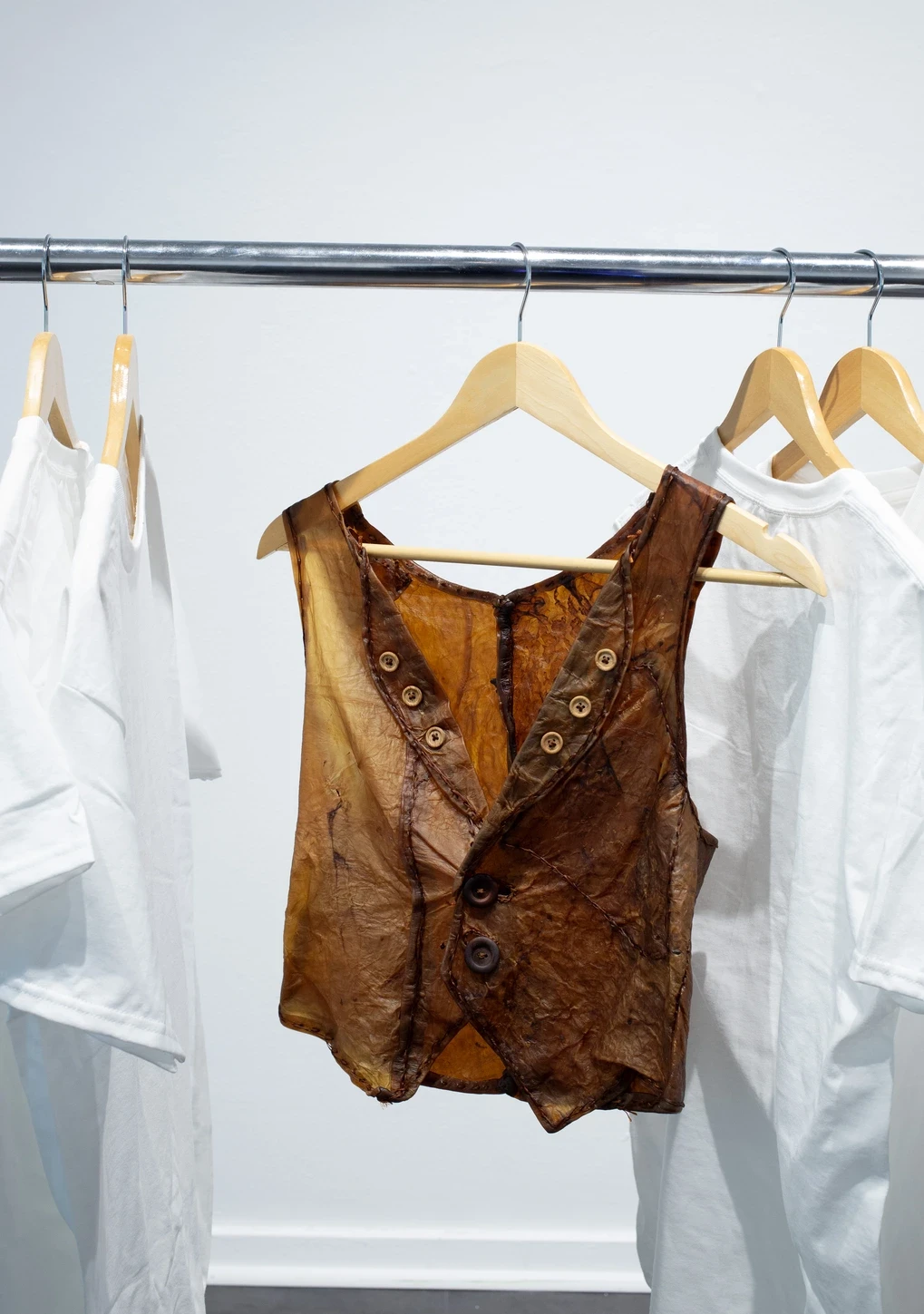
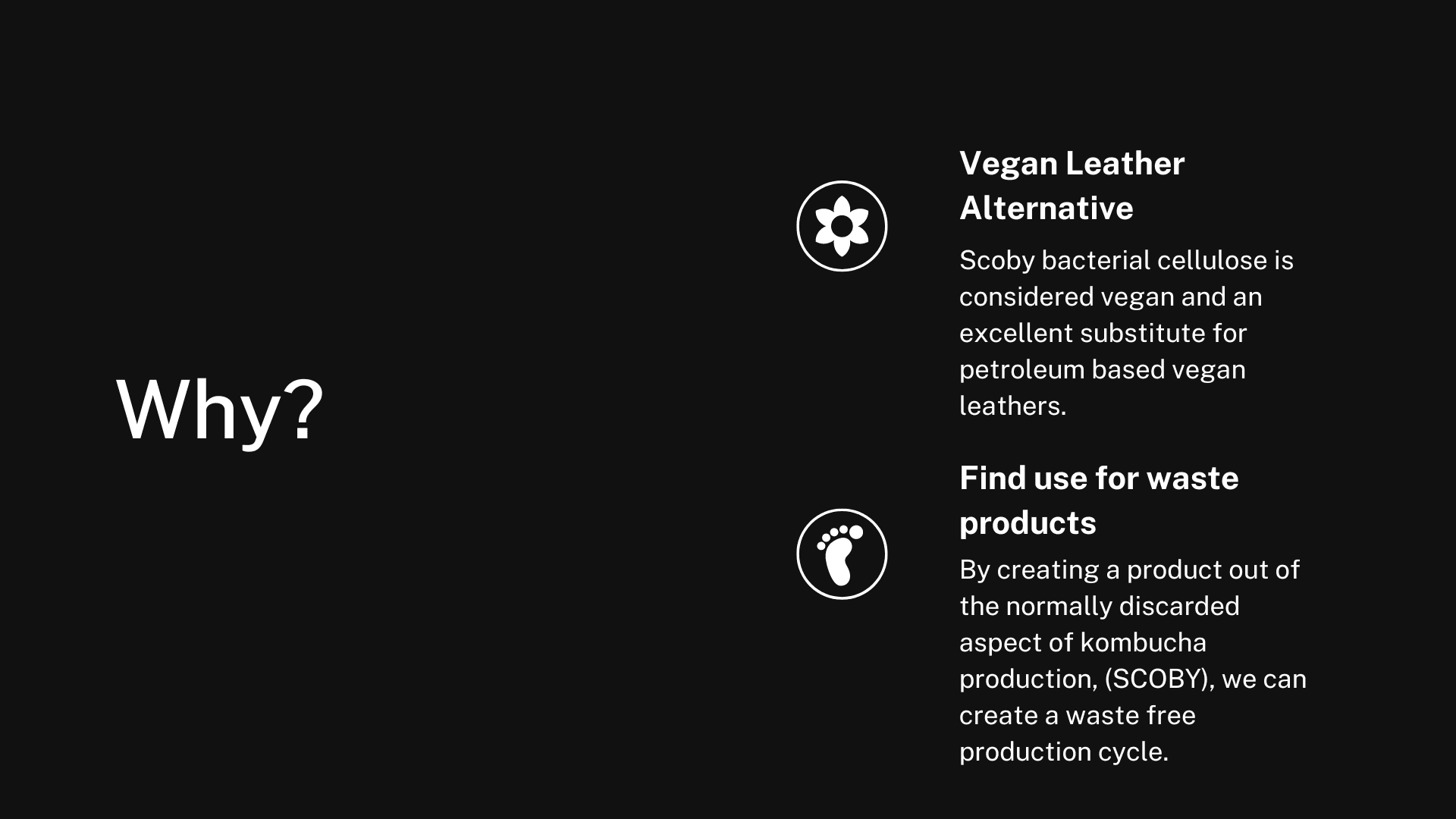
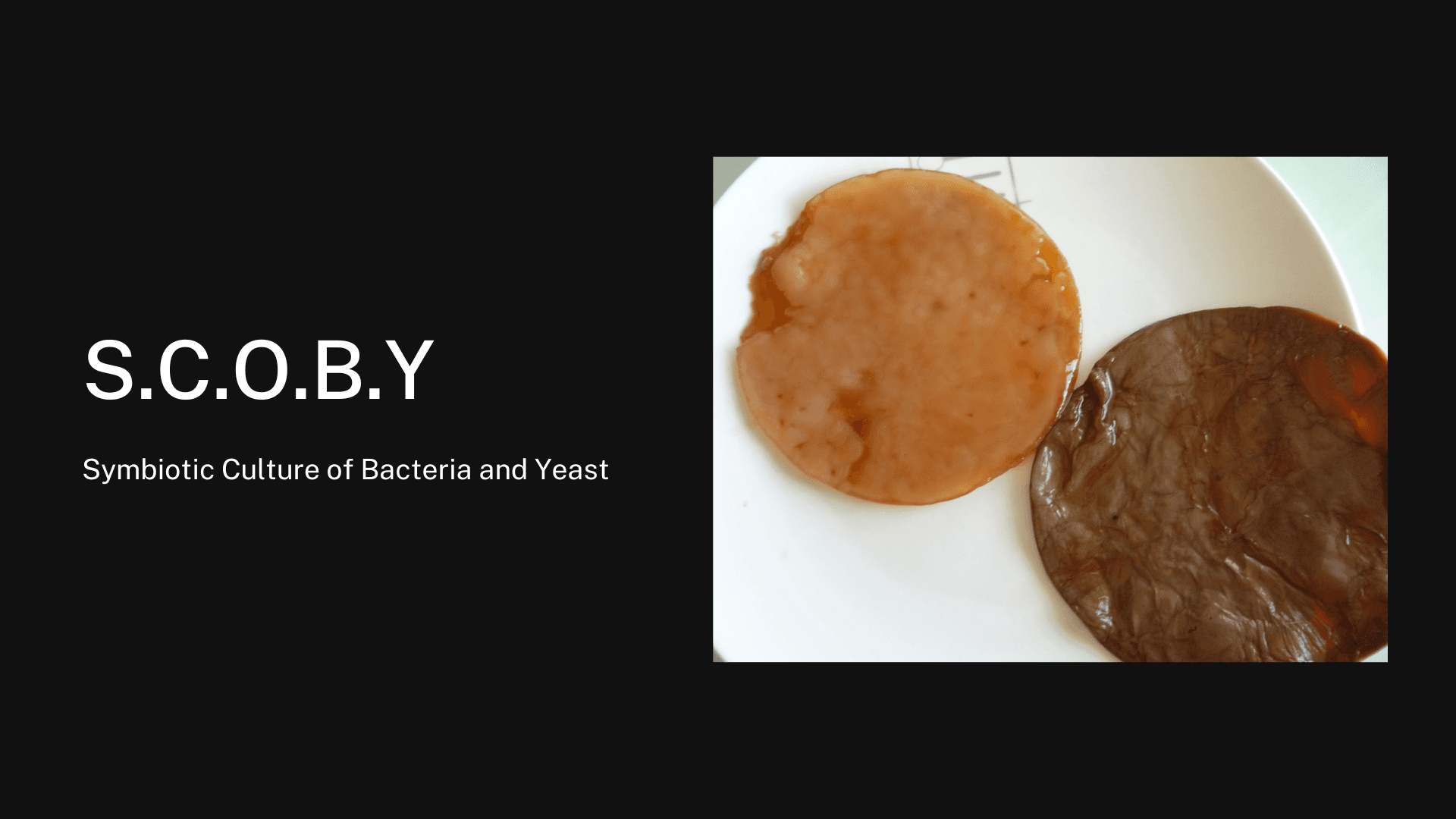
This work investigates sustainable practices amidst a trend-cycle fueled fashion culture. Our society has become consumerist in nature, and fashion trends are a large contributor to the ever-growing textile waste epidemic. My intentions with this work are to demonstrate how it is both possible and accessible to create wearable biodegradable fashion. Through the processes of fermentation and dehydration, I created a leather-like textile of bacterial cellulose known as SCOBY. Commonly used in creating kombucha drinks, scoby is a living bacterial culture that serves many purposes. By fermenting black tea, sugar, and scoby bacterial cultures, I was able to create a usable textile that is both functional and beneficial to the soil upon disposal. The vest consists solely of scoby fabric and cotton thread, sewn through traditional mediums. I want to show how this unconventional medium can be used as a substitute for common textiles such as nylon, polyester, and cotton, which take years to degrade and have a harmful ecological impact. The projected film is intended to contextualize the jacket’s function as equivalent to any other leather jacket. Scoby leather is a revolutionary medium that is simple to create and is functional like a typical fabric. This vest proves that it is possible to escape the single-use fashion cycle and limit our textile waste.
Client
Self-Initiated Thesis Project
DELIVERABLES
Biomaterial textile samples, kombucha-based fabric, custom blazer garment, editorial video documentation, installation display
Year
2024
Role
Material Researcher, Textile Designer, Garment Designer, Videographer
Process/Solution
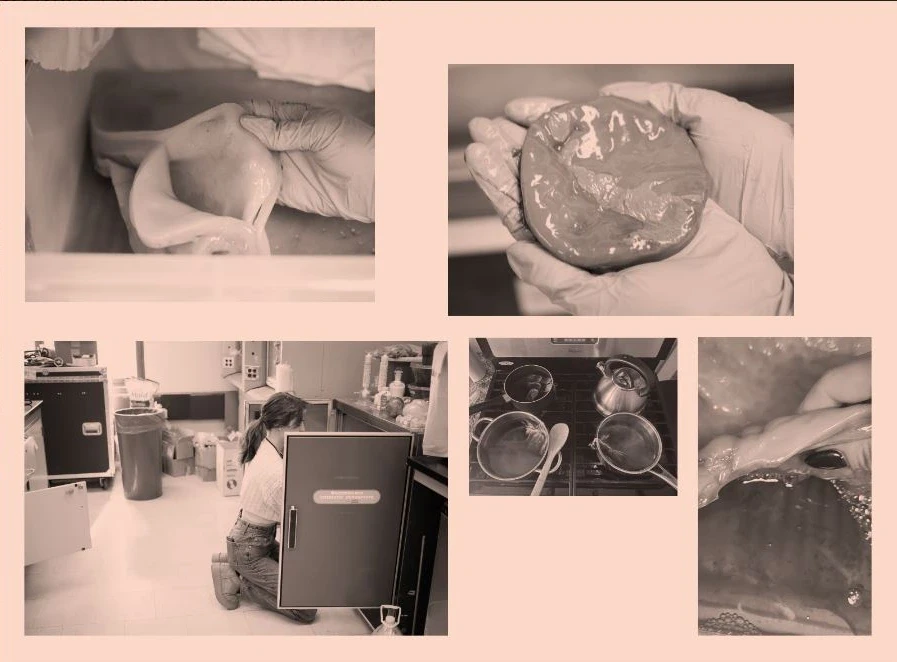
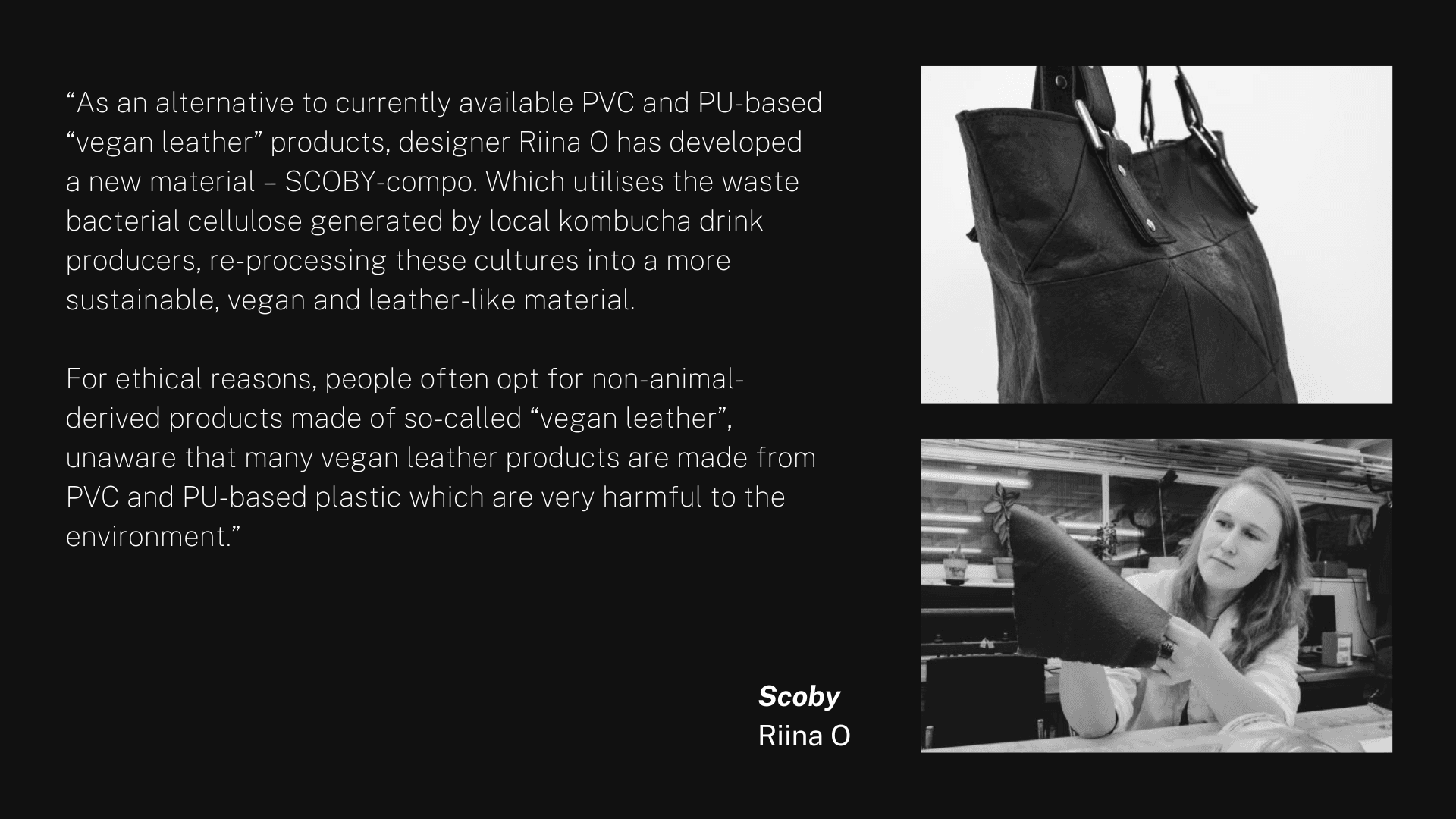
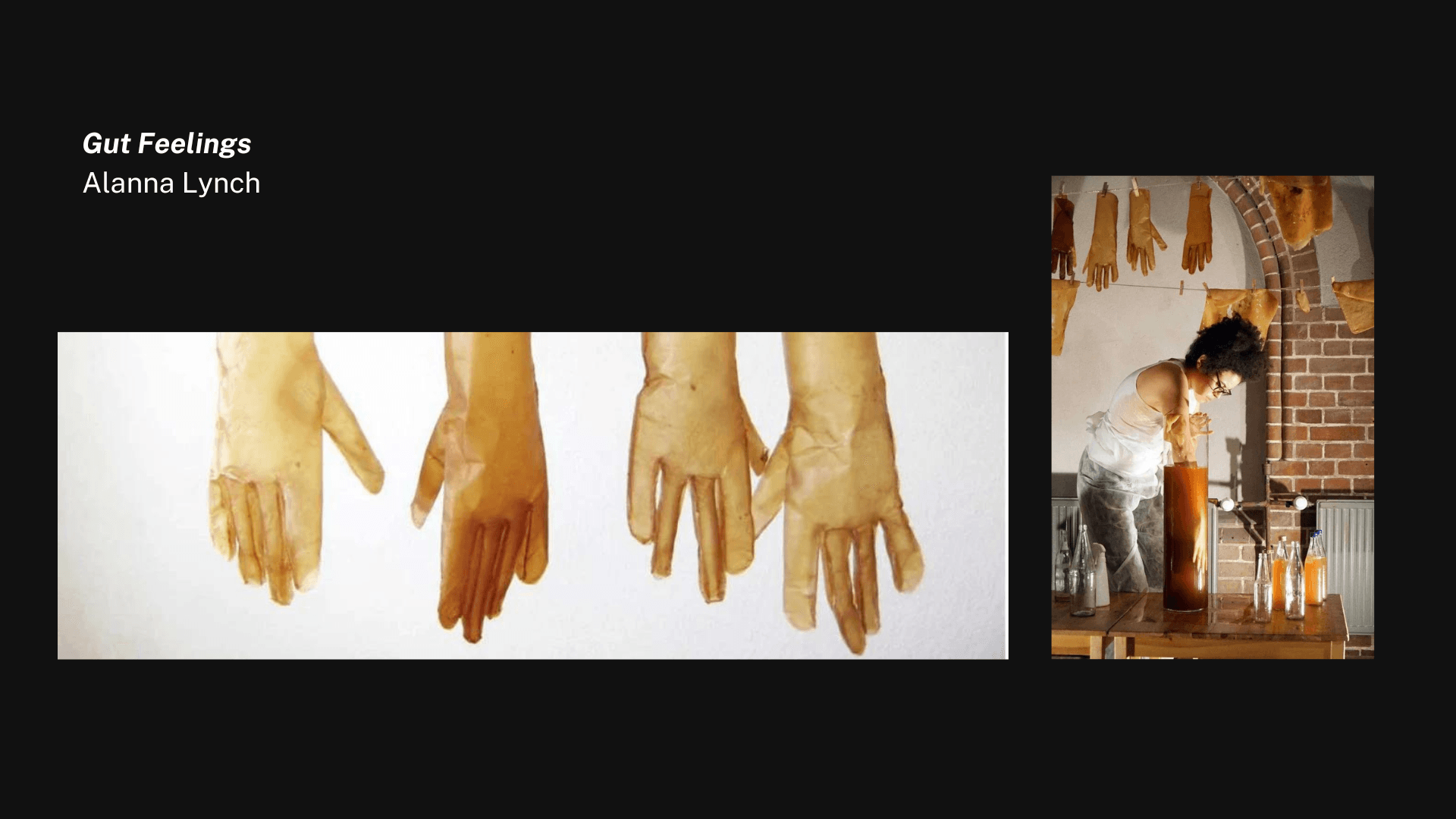
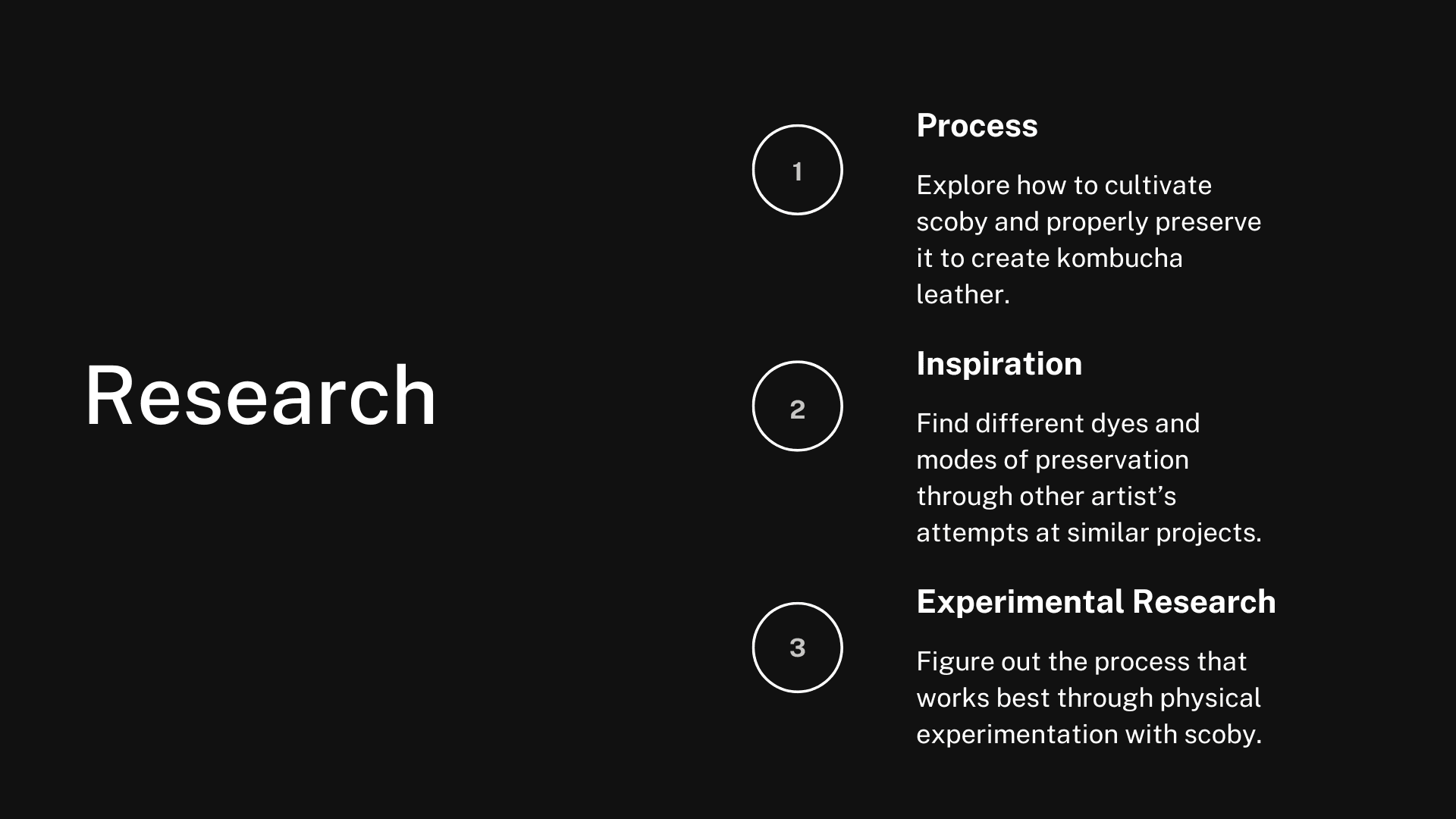
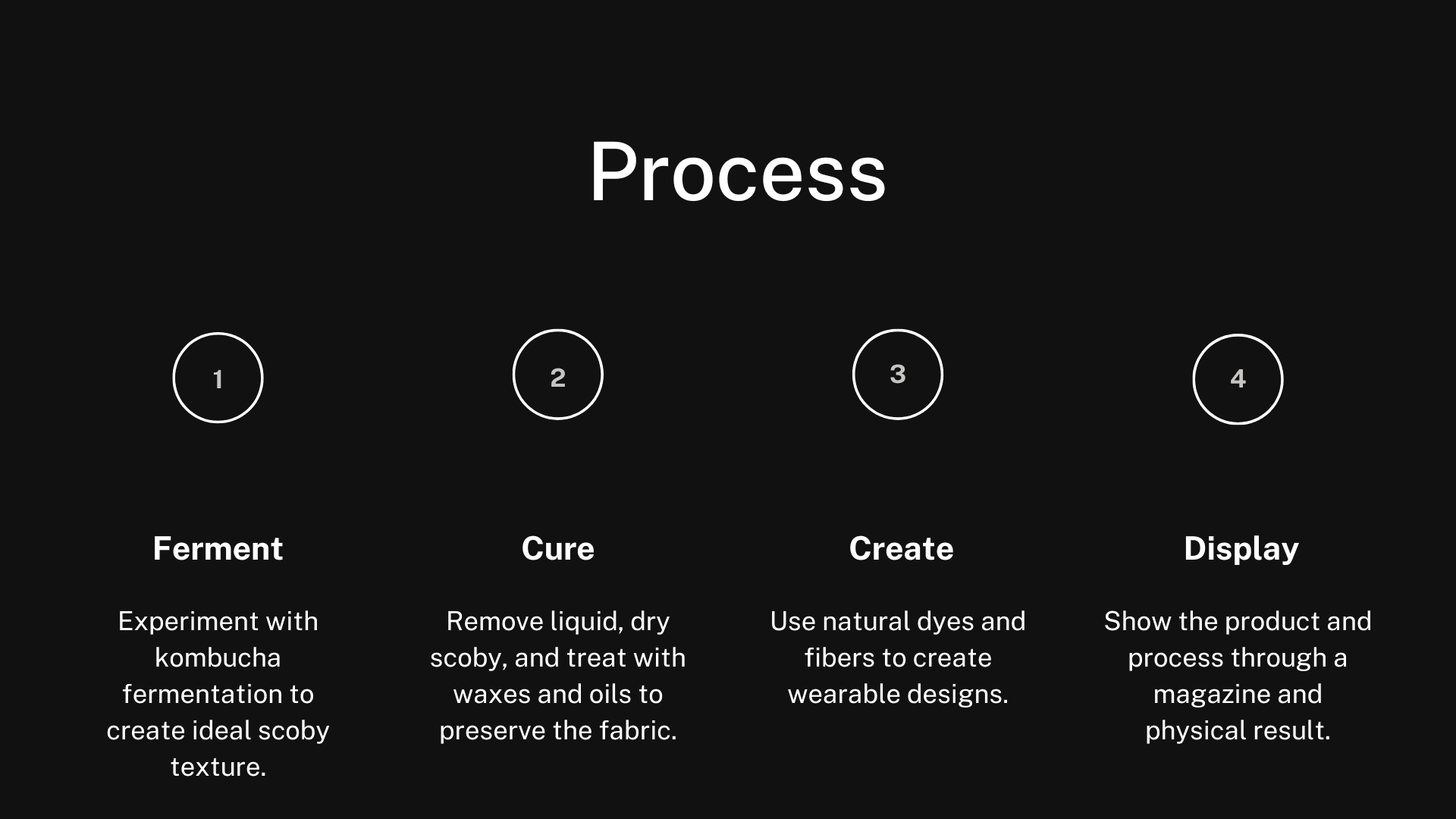
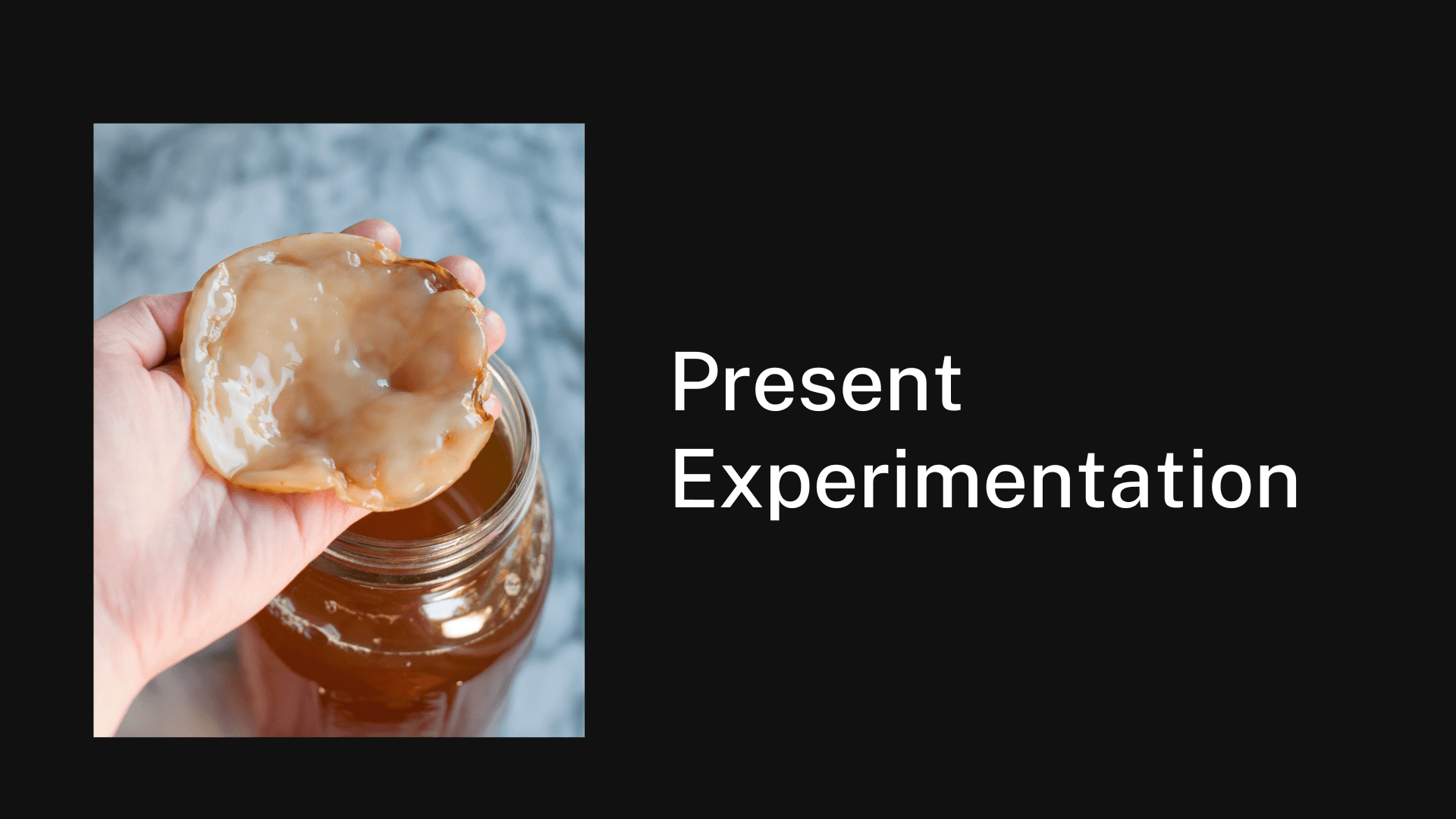
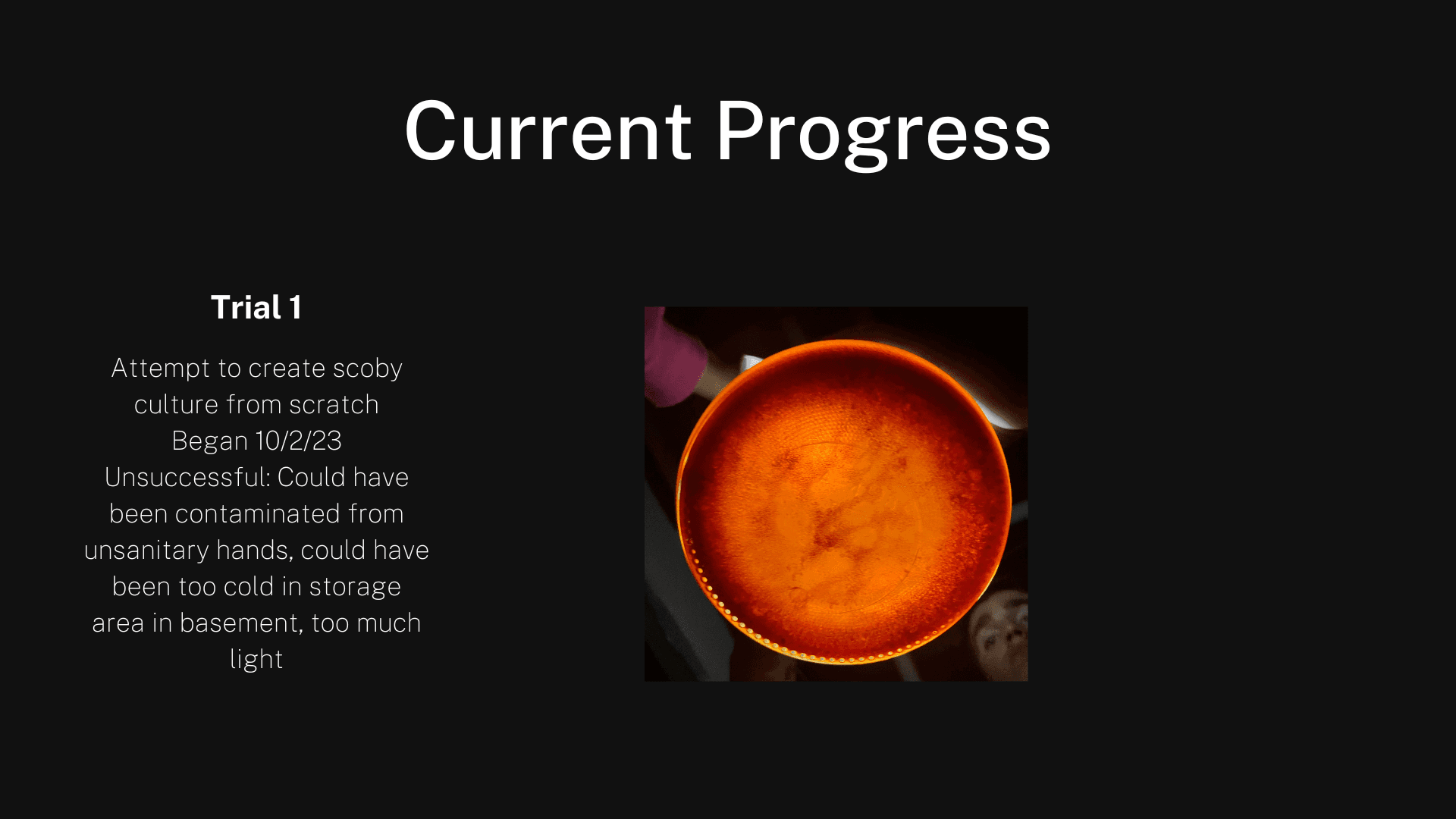
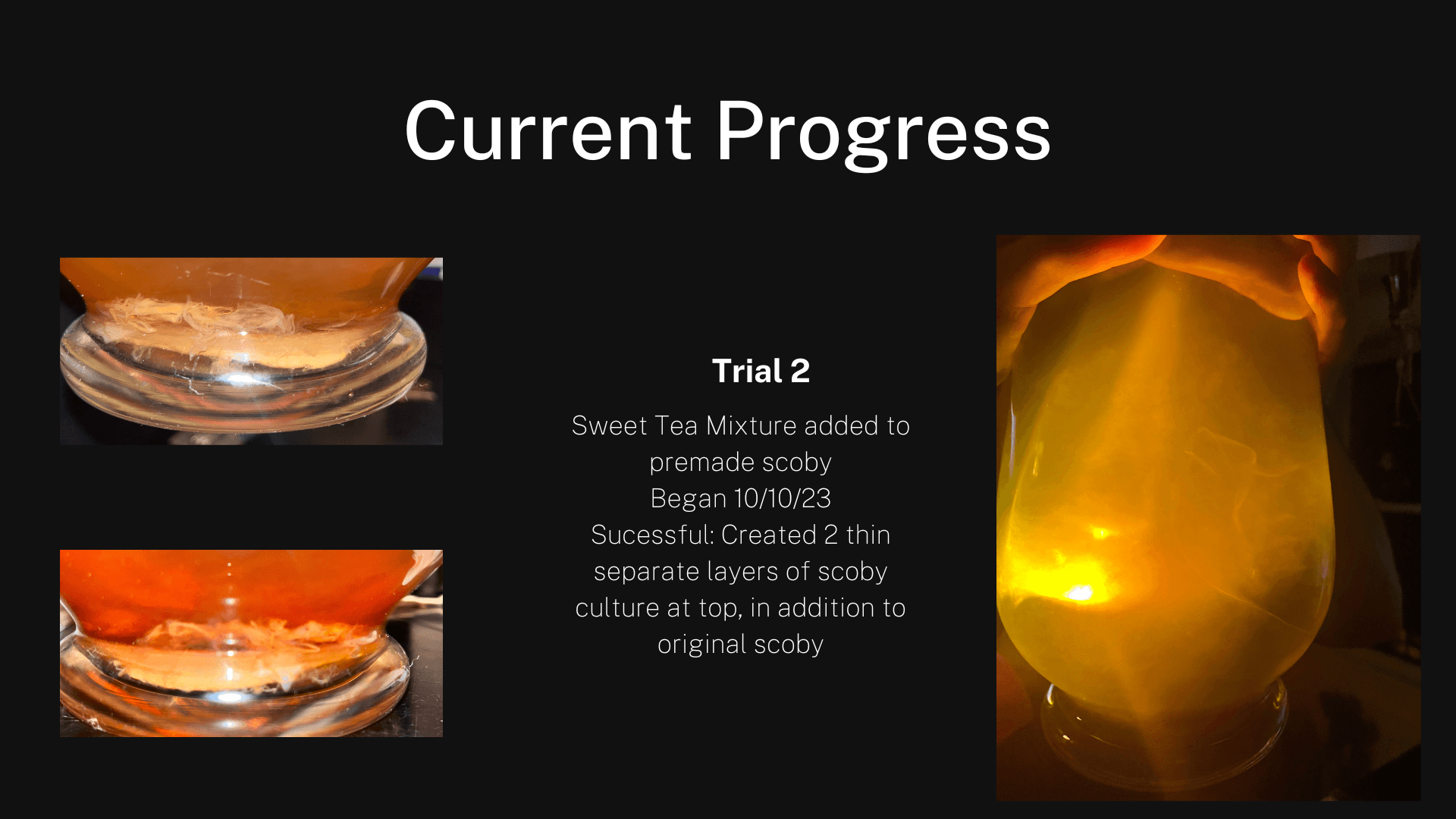
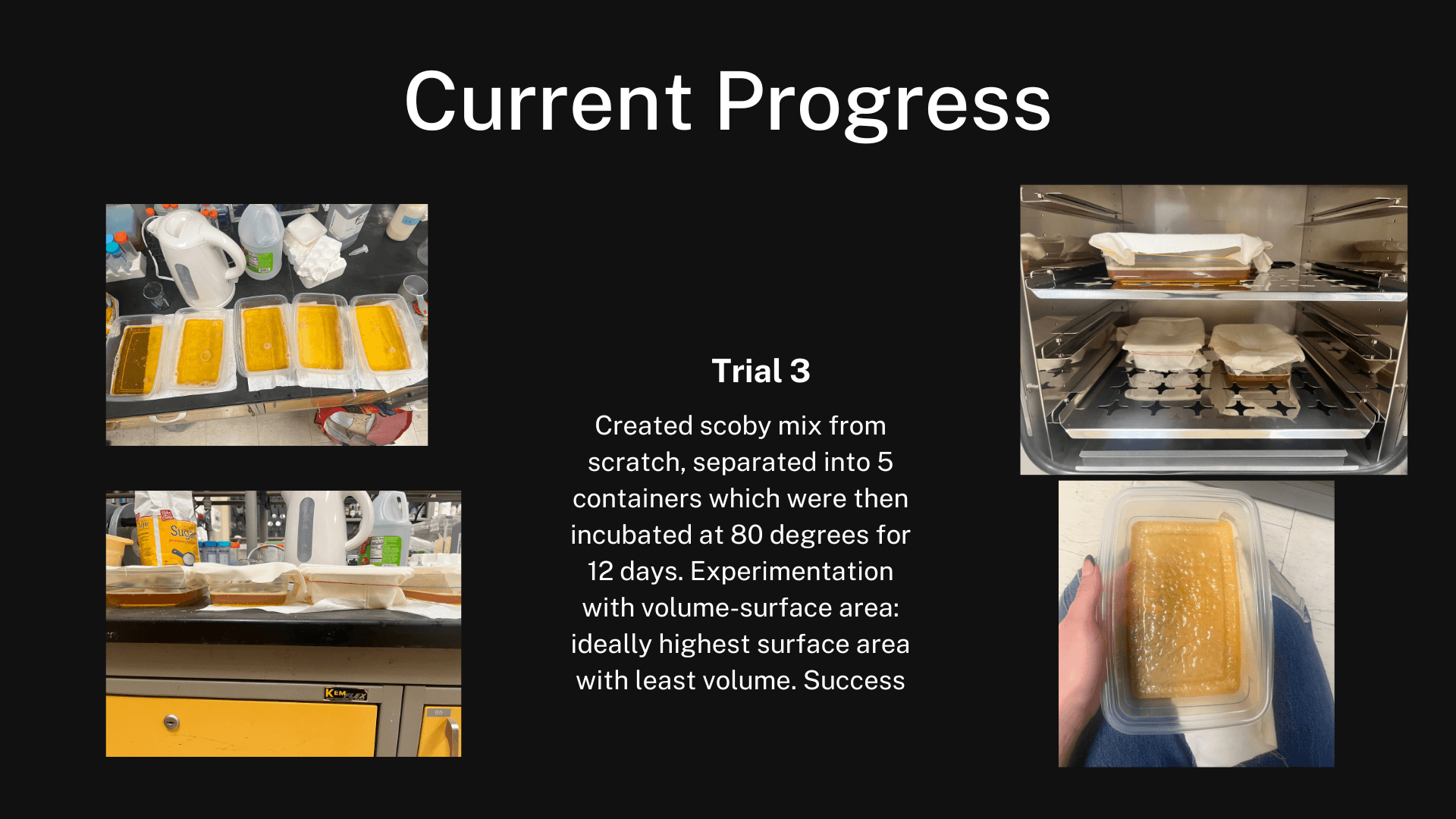
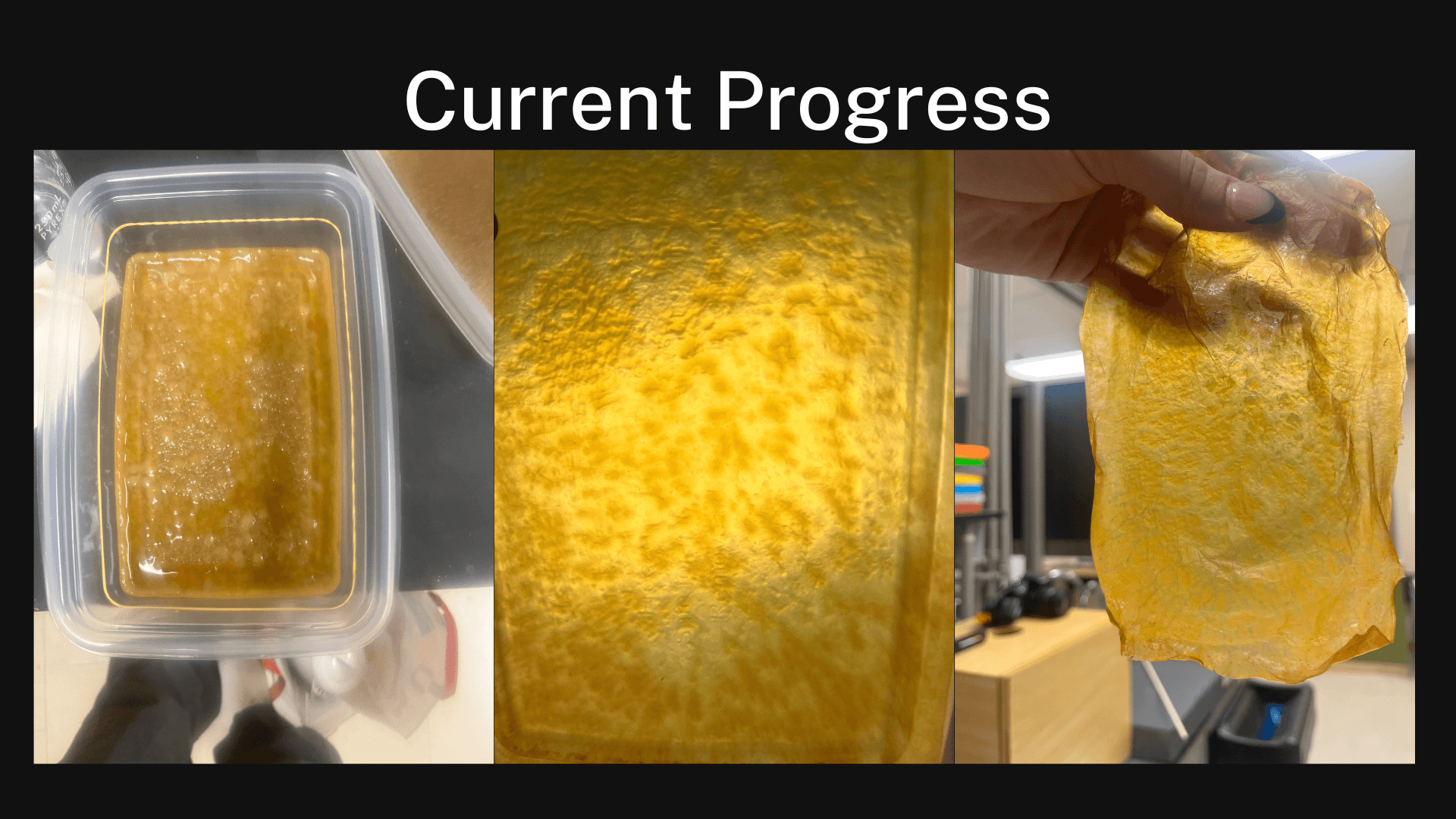
GROWING THE TEXTILE: The material was produced through kombucha fermentation using sweetened tea and a SCOBY culture. During fermentation, bacteria generate a cellulose biofilm that forms a thick layer on the surface of the liquid. This bacterial cellulose was harvested and dried to transform the gelatinous film into a flexible leather-like textile.
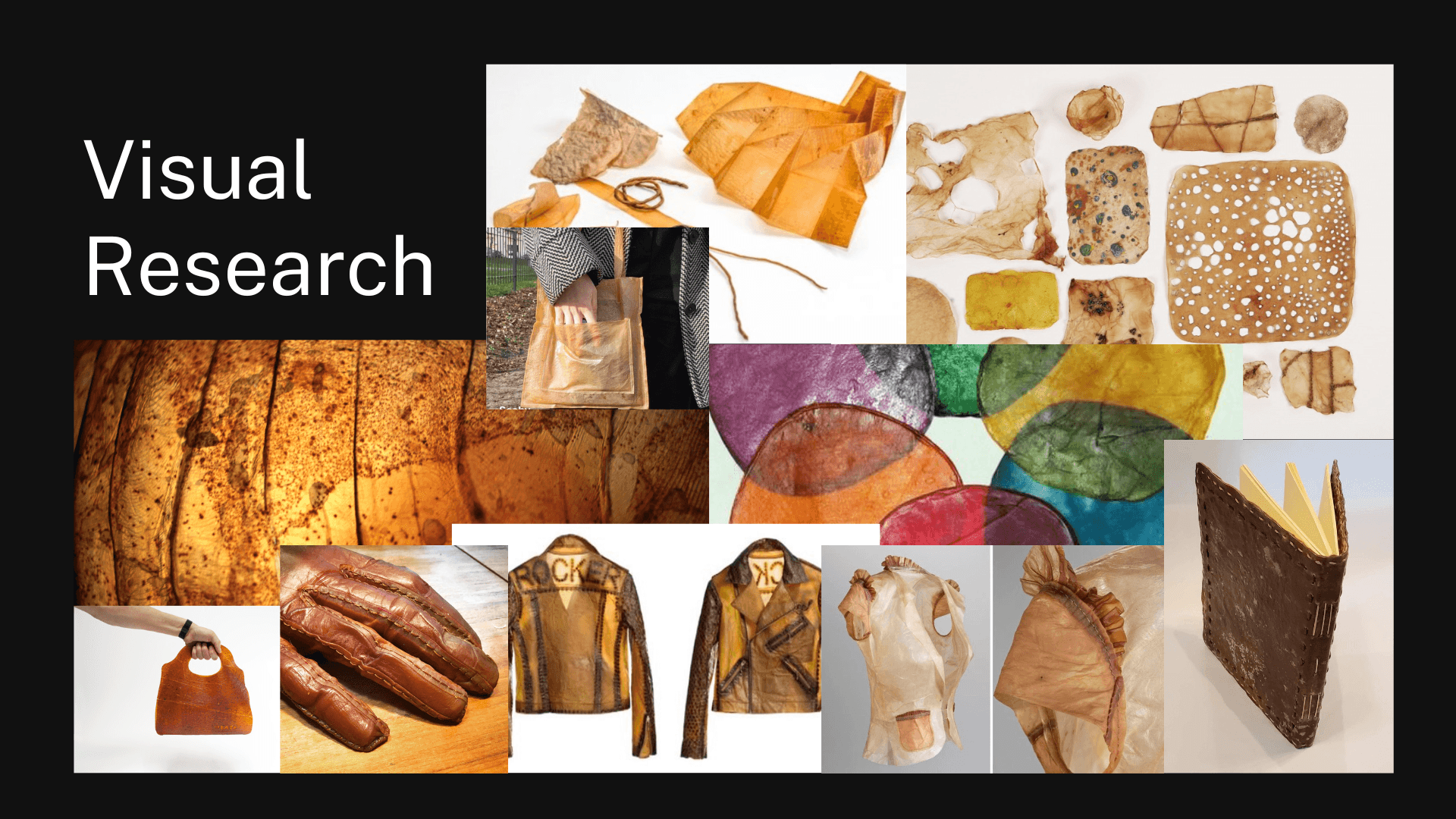
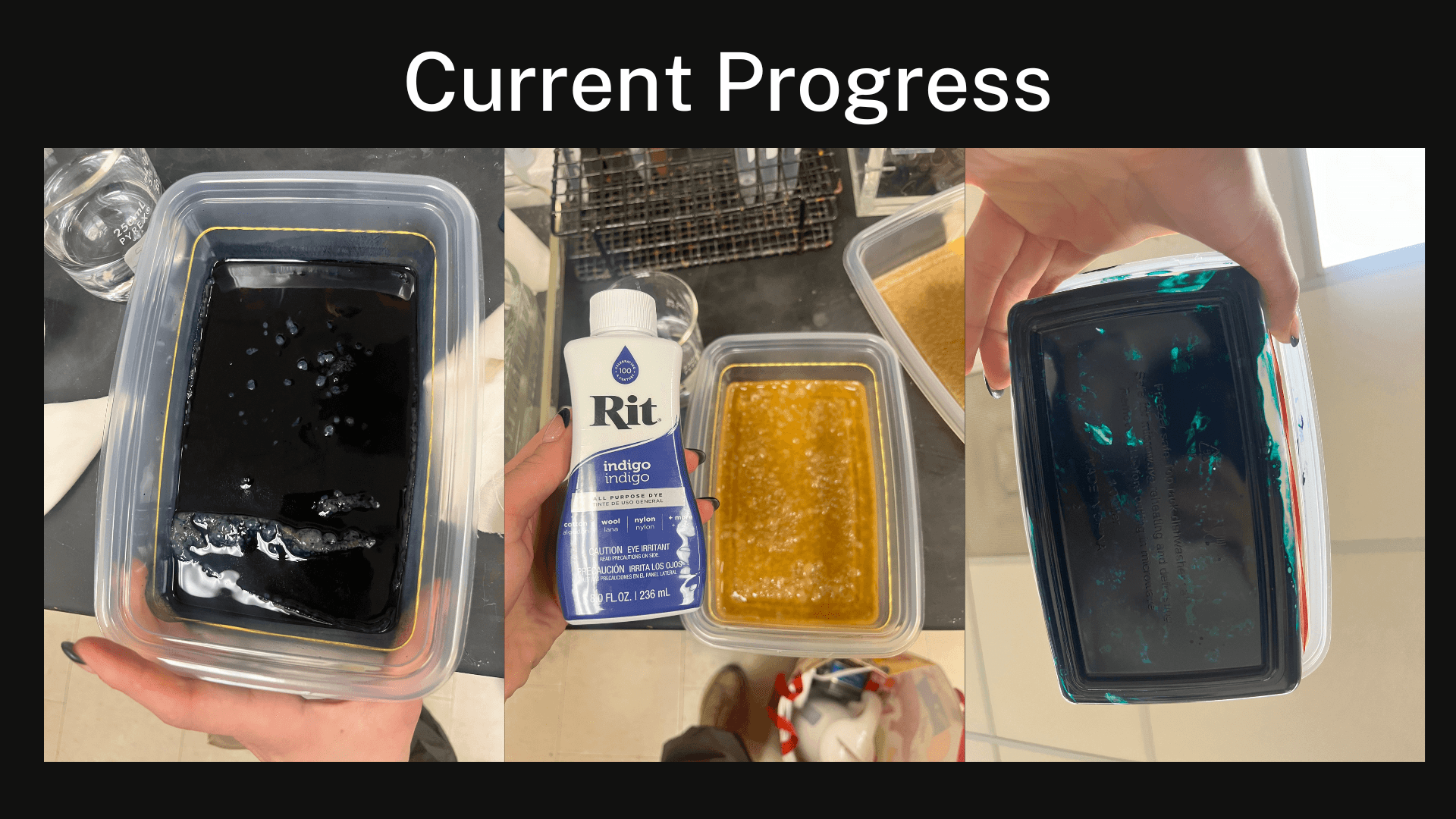
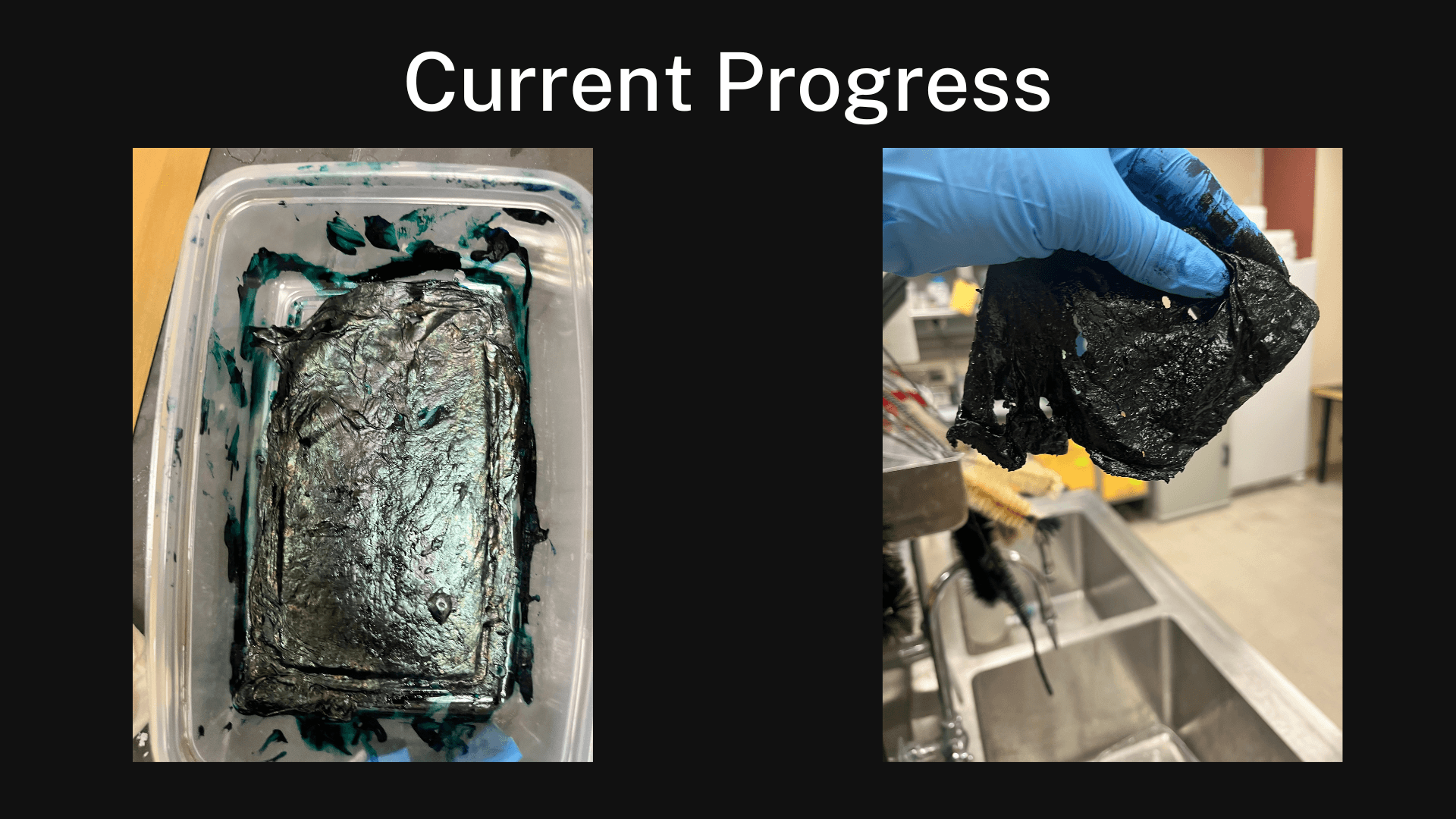
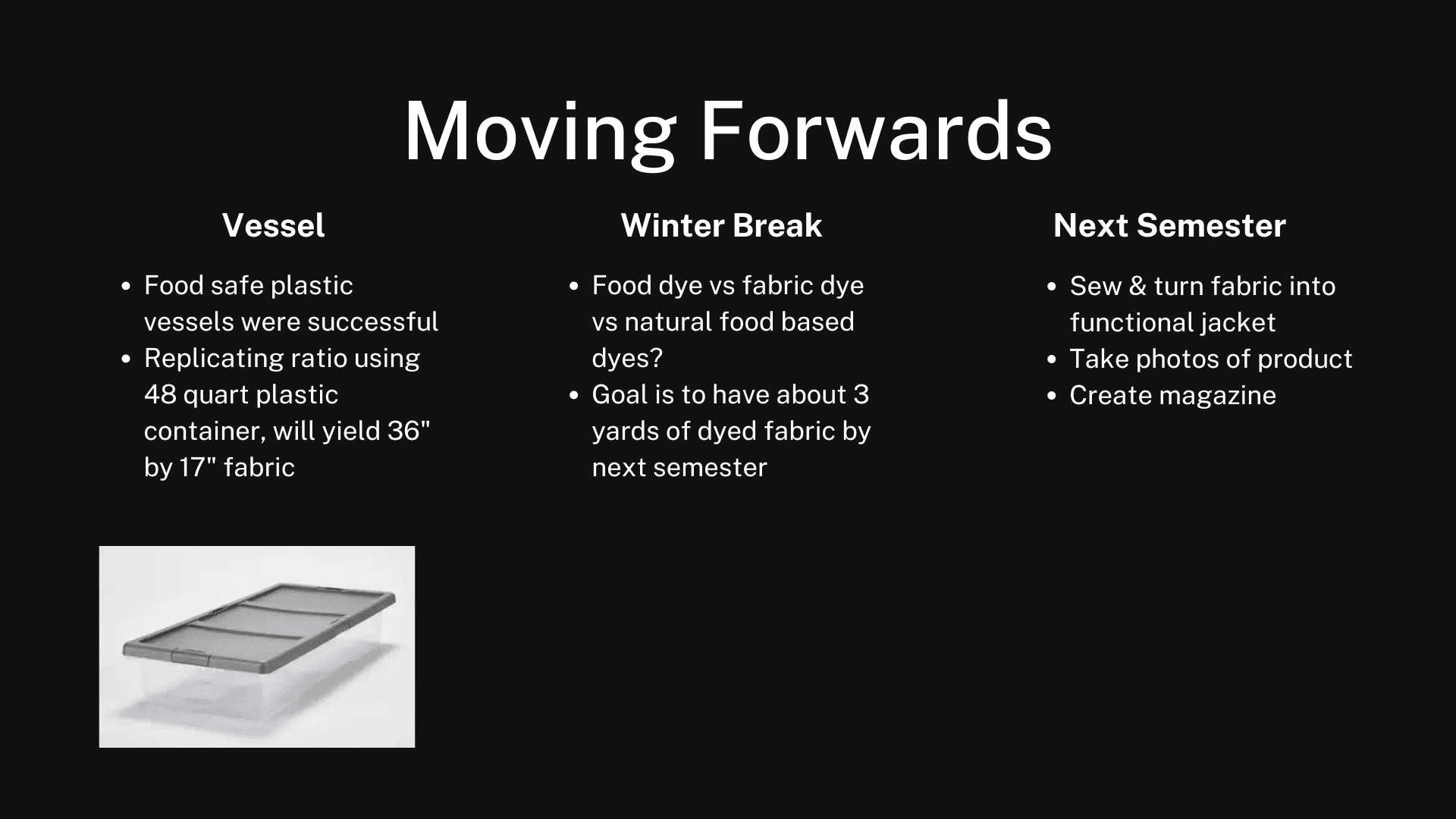
MATERIAL PROCESSING & PRESERVATION: Once harvested, the cellulose sheets were carefully dehydrated to strengthen their structure. Natural waxes and oils were applied to preserve the material and improve durability and flexibility. The resulting textile maintains a leather-like texture while remaining entirely biodegradable.
GARMENT CONSTRUCTION: Using the grown material, I constructed a classic unisex blazer jacket. The blazer was chosen intentionally as a recognizable wardrobe staple that traditionally outlasts fashion trends. The garment was sewn using cotton thread and traditional garment construction methods, demonstrating that unconventional biomaterials can function similarly to conventional textiles.
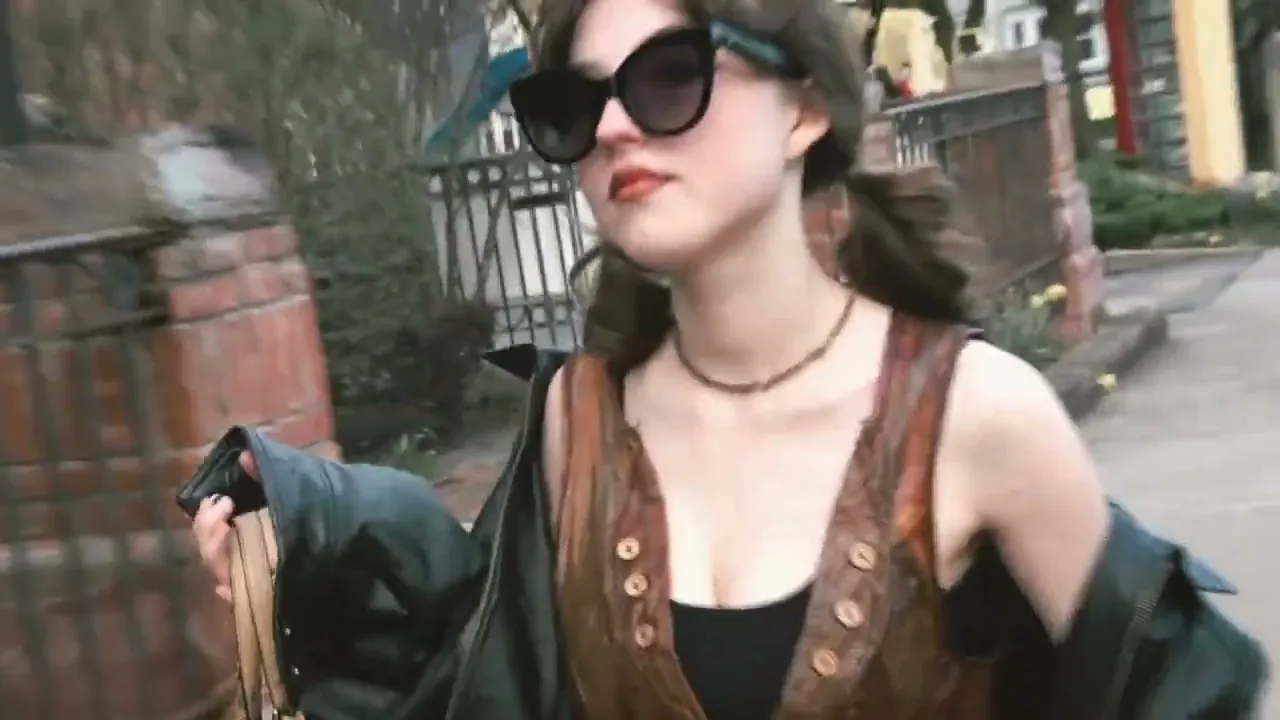
EDITORIAL VIDEO & DOCUMENTATION: To contextualize the garment as a functional piece of clothing, I directed and filmed an editorial-style video featuring a model wearing the blazer in public environments. The video documents the garment in motion and situates the experimental material within everyday fashion contexts. The final presentation included both the physical blazer displayed in the gallery and the accompanying video projected behind it, creating a dialogue between the garment and its real-world application.

PROJECT STATEMENT
My final piece will highlight a unisex classic style vest jacket created from a biologically synthesized fabric made from dehydrated scoby. Scoby (symbiotic culture of bacteria and yeast) is a living bacterial colony that is mainly used to ferment tea into the popular drink kombucha. My goal with this work is to create a conversation around aggressive waste in the fashion industry and demonstrate alternative textile options to commonly used non-biodegradable fabrics.
I chose a vest to showcase the fabric as it is a commonly recognizable object. In addition, vests are unique in that they are a wardrobe staple that outlasts trends. When dried, scoby resembles a leather-like texture. When properly preserved, scoby can last years. When disposed of, the bacterial cultures in the textile degrade quickly and benefit the ecosystem. My final work display will also include a short video displaying the vest being styled and worn in public to contextualize its function. This video will be projected on the wall behind a clothing rack containing the scoby vest.
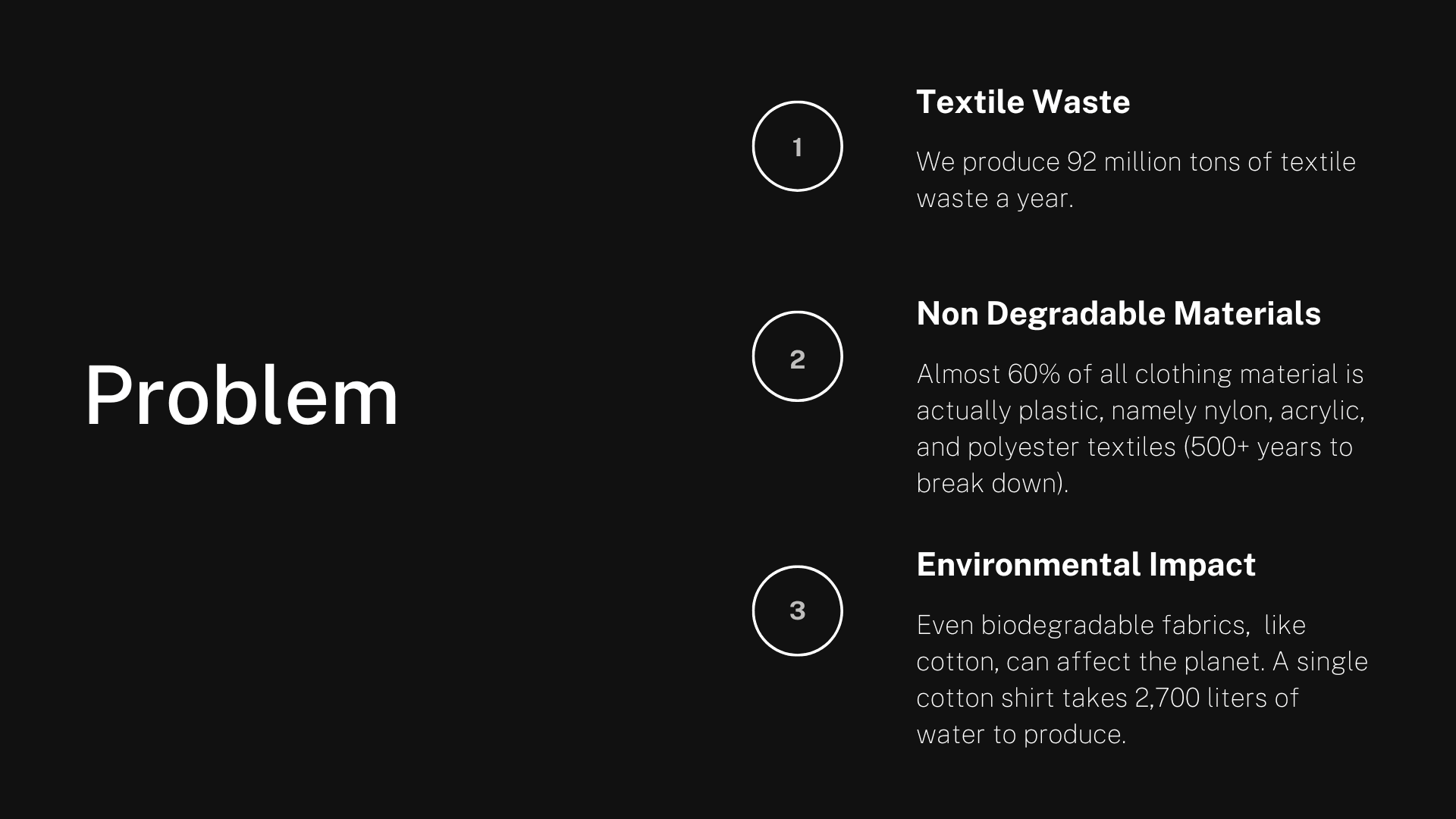
Bacterial cellulose is a fairly new concept within the fashion industry. It is not yet a popular medium within financially accessible fashion. Perpetuated by accessibility and social media advertising, trend cycles have reached an exponential rate. As a result, many consumers cycle through clothing and dispose of it when it is no longer fashionable. Our society produces around 92 million tons of textile waste each year. With this work, I hope to show how it is possible to utilize this uncommon medium as a substitute for nondegradable fabric in a cost effective manner. I also hope to incite a conversation around the mass consumerist culture of fashion.
My goal is to create a clothing item that the audience would not discern as any different from a typical vest until closer inspection. I want to show that bacterial cellulose can be an excellent substitute to modern fabric and should be utilized as such. Few people are aware of the process and qualities behind kombucha. I intend to educate my audience about the incredible uses of scoby and incite an inward look at their own fashion consumption practices.
As a graphic designer, I typically work in digital mediums. With this work I wanted to challenge myself to create a physical product and then display it in an intentional manner with a digitized component (video). Design encompasses a broad variety of mediums and has a constantly shifting definition as technology changes. The core of design relates to displaying abstract concepts in an accessible fashion. Design also faces constant trend cycles as society shifts. I hope to demonstrate the idea of escaping consumerist culture and taking responsibility for one’s environmental impact through the use of an unconventional fashion medium.

Outcome
The project demonstrates how biological processes can be used to produce biodegradable textiles that challenge traditional fashion manufacturing. By combining material experimentation, garment design, and visual storytelling, the work highlights the potential of bacterial cellulose as an alternative to synthetic fabrics. Ultimately, the piece encourages viewers to reconsider their relationship to clothing consumption and imagine a fashion system where garments are grown, worn, and returned safely to the environment.